 Not a Person
The reality no one taught you
You are not a person.
…and here's why that matters.
Up to 70% of what you earn over your lifetime will be taken. Your freedom will be limited, your choices controlled, and you'll pay penalties for non-compliance — all because the system presumes you are the legal person it created and controls.
That's a deception. You are not that person. You are a free and equal living being.
Lawfully separating from the legal person reclaims your freedom.
Everything — the 5 Step Path, the AI Expert grounded in your own jurisdiction's law, the community and the full narrated library — for £15 a month, cancel anytime.
Open your eyes
The person is not you
Two things share your name, and you were made to feel they are one. They are not — and that single, concealed difference is the foundation of a lifetime of control and extraction.

The legal person
A construct
Its very name comes from persona — a mask. Made by statute and registration, it carries the obligations, the licences, the liabilities and the taxes. It exists on paper, and it answers to the system that made it.

The living being
You
Born free and equal, before any statute. Bound by the person's obligations only when you step into the role — and only on a valid agency you actually agreed to.
The mechanism
Two presumptions, neither ever proven
Statutes bind the person, not the living being. They reach you only through two presumptions the system never proves — and never has to, for as long as they go unchallenged.
The presumption of agency
That you act as agent for the person, bound by its statutes — though no contract you knowingly made exists. The system simply presumes it does, and counts on you never challenging it.
The presumption of beneficial interest
That the fruits of your labour passed to the person, falling within reach of tax and claim. No instrument of transfer is ever produced — because none was ever signed.
This single unchallenged presumption is the basis of all authority over you — and of all taxation.
The effect
A lifetime, quietly extracted
Left unanswered, those presumptions authorise a lifetime of taking. You are taxed when you earn, when you spend, when you own, when you move — then taxed again on whatever remains when you die. Your time and energy are presumed owed by default: servitude, renamed as duty.
In the real world
Everything you call “tax” rides on it
These aren't separate rules with separate justifications. Every one is statutory — addressed to the legal person, and reaching you only through the very same two presumptions.
Taxes & duties
Licences & permissions
Over 250,000 statutes in the UK alone — every one applied to the person, none to the living being. And because the mechanism was never disclosed to you, in equity the system comes with unclean hands. That isn't opinion; it's a point of law.

The part you were never shown
One system, two layers
You may have always sensed it without being able to name it: the rules don't fall on everyone alike. They don't. “The system” has two layers. Most are kept inside it — presumed into the person and farmed for a lifetime of tax, licence and compliance. A smaller class lives outside it: aware of the mechanism, and quietly using the very structures — private trusts and lawful standing — that keep them beyond its reach.
That is the reality most people feel but can never quite reconcile. What you'll learn here is simply that same knowledge — taken out from behind the curtain and made available to everyone.

Why it holds
Conditioning and concealment, not consent
None of this rests on your agreement. From your earliest years you were taught to identify with the person and to treat its demands as natural — while the mechanism itself was kept out of sight, understood by only a few. It is held in place not by your consent, but by belief and by what you were never shown.
A legitimate system has no need of deception. This one depends on it.
But a presumption is not a fact. Seen clearly, named, and answered, it falls — and with it, the authority built upon it. That is exactly what the path that follows is for.
The hidden grid
See the system you live inside
What we call the “legal system” is really a statutory layer — over 250,000 rules, all written to bind and control the legal person. Picture it as one vast, interconnected web: banking, work, companies, property, children, food, travel, media and more, every strand wired into a single point — the person. Statute reaches that person. Two presumptions then bridge from the person to you.
Statute reaches the person. Two unproven presumptions bridge from the person to you — pulling a living being into the grid. Challenge them, and see what changes.
Statute is not law
Reaching beyond its jurisdiction
Statute governs the person — that is the limit of its lawful reach. What the picture above shows is that same statutory layer stretching past that limit, to the living being, on a presumption that was never proven. That stretch is not law; it is a deception in the costume of law.
And the older, deeper tradition — common law, equity, and the constitution in Magna Carta and the Bill of Rights — exists precisely to restrain government over-reach of exactly this kind. The law is not the cage. Properly understood, the law is on your side.
The price you were taught to pay
Break a rule, pay the price
Most of those rules don’t merely forbid — they carry a price. Behind the great majority of the 250,000 sits a fine, a charge, a penalty for breach. And we were trained to accept it without question.
From the first days of school the reflex was drilled in: break a rule, pay the price. Lines, detentions, marks deducted — obedience rewarded, transgression charged. By adulthood it feels entirely natural that an authority can write a rule and attach a cost to breaking it.
That conditioning is worth a fortune. It turns rule-breaking — much of it victimless — into a vast, steady current of extraction: penalties renamed, fines, levies and charges, flowing endlessly from living beings who never agreed to be bound. The same deception, monetised one infraction at a time.

The turn
The law is on the side of the living being
Here is the part the deception depends on you never realising: the law itself was built to protect you. The same deep tradition the statutory layer hides behind — common law, equity, the constitution and trust law — exists to keep the living being free.
Common law
Built on one foundation: do no harm, cause no loss, cause no interference. Where there is no harm and no injured party, there is no wrong.
Equity
Recognises the living being's true, beneficial interest — and refuses its aid to any claimant who comes with unclean hands.
The constitution
Magna Carta and the Bill of Rights set hard limits on arbitrary taking and government over-reach. Old, robust, still in force.
Trust law
Separates legal title from beneficial interest — letting you stand apart from the person, as the wealthy always have.
None of it provides for servitude, or for the fruits of your labour to be taken without your consent. The law is not the problem — the statutory over-reach is.
The protection has always been there. It was simply never shown to you. Exposing it — and teaching you to stand on it — is the whole purpose of this platform.
Grounded, not fringe
Established law — not pseudo-law
Let's be plain about what this is. Not a Person teaches black-letter law — the law as it actually stands — not conspiracy theories, and not the pseudo-law that circulates online.
This is not a loophole or a trick. It is how lawful authority over a living being is actually formed — and the established mechanisms, in law and equity, that both support it and challenge it.
Eleven jurisdictions — one mechanism
Does this apply where you live?
Yes. The distinction between the living being and the legal person — and the two presumptions that bridge them — is the same everywhere. What changes is the expression: the instruments, the registers, the words your own law uses. So the Path teaches the mechanism once, and the AI Expert now speaks from your jurisdiction's own law. Tell us where you are when you start the Path, and the Expert grounds itself in your country's verified sources — with its coverage shown to you before you rely on it.
Live now — eleven jurisdictions
All at full depth: education, establish and respond.

United Kingdom
Common law & equity

Australia
Common law & equity

Canada
Common law & equity

Ireland
Common law & equity

New Zealand
Common law & equity
Scotland
Common law & equity

United States
Common law & equity

Belgium
Civil law

Germany
Civil law

Netherlands
Civil law

Spain
Civil law
The mechanism applies here too — tell us, and we build next













If yours isn't listed yet, say so when you start the Path — you lose nothing now, and it tells us where to build next.
Common-law & equity jurisdictions
United Kingdom, Australia, Canada (outside Quebec), Ireland, New Zealand, Scotland and United States, live now. The position is taken through the law of trusts and equity — a private express trust separating legal title from beneficial interest, completed by a transfer instrument. The Trust Builder produces an English-law (England & Wales) deed pack; outside the UK, your own jurisdiction's Expert works through how that position maps to your law before you execute anything.
Civil-law jurisdictions
Belgium, Germany, Netherlands and Spain, live now; more to follow. There is no native trust, so the position is taken through your law's own machinery — the code position and the sworn or notarial declaration. Your jurisdiction's Expert is grounded in those instruments, their formalities and their penalty provisions — not in a translation of the English trust.
Expert levels — Education, Establish, Respond — are earned through the Path and never purchased, the same in every jurisdiction.
The path
Five steps to reclaiming your freedom
A clear, step-by-step journey — five steps take you from seeing the mechanisms the system uses to control and extract from you, to establishing your true position, including creation of your private express trust, to challenging claims and correcting the record ready for digital ID. Every block is narrated — read it or listen — and each step ends with an AI review conversation, your own written step notes, and the tools that step unlocks. It's progressive and actionable.
75 narrated blocksabout 9½ hours of teachingan AI review and your own step notes at the end of every stepthe Expert in eleven jurisdictions
- 01
Awaken to the system and its mechanisms
See how the system really works — how a legal version of “you”, created on paper at birth, is quietly used to control you and take from your life. Seeing this clearly is the ground everything else stands on.
What you get 11 narrated blocks · 1 hr 2 min · first block free to everyone · ends with an AI review conversation and your own written step notes
- 02
Establish your true and free position
Take up who you really are in law — born free and equal, answerable to no one by default — and create a simple private express trust that puts that position on a settled, lawful footing. The step where understanding becomes real, with a guided builder that produces your complete document pack: the trust deed, the transfer instruments that complete it, and a Guide to Your Trust.
What you get 20 narrated blocks · 3 hr 20 min · AI review + step notes · unlocks the Expert's Declarations mode — trust creation, operating guidance and standing statutory declarations · the Trust Builder: deed, transfer instruments, execution checklist and Guide, as PDF or Word
ToolsGuided trust builderTrespass notice generator
- 03
Live your position, and hold it
Make your position part of everyday life — calm, clear and quiet — so it becomes simply how you live, not just something you understand. This is what makes everything that follows hold.
What you get 10 narrated blocks · 1 hr 13 min · AI review + step notes · the proactive anchors: the trespass notice and your land-registry trust position
- 04
Respond to claims, free yourself
Answer letters, demands and claims simply and without fear — understanding what’s really happening when the system pushes, so that, handled calmly and correctly, its hold on you falls away. With a claims workspace that reads what’s actually been claimed and helps you respond, round by round.
What you get 24 narrated blocks · 2 hr 20 min · AI review + step notes · unlocks the Expert's Claims mode — real claim responses and claim-specific declarations (includes everything in Declarations) · the Claims tool: a private workspace per claim, drafting conditional acceptances, position statements, statutory declarations, evidence bundles and standing objections
ToolsClaims management tool
- 05
Correct the record, prepare for digital ID
Put your true position on the official record and prepare for digital ID — a clear, considered strategy to protect your standing as the system centralises, honest about what it can and can’t do.
What you get 10 narrated blocks · 1 hr 23 min · AI review + step notes · the statutory declaration and the cross-agency record, honest about what it can and can’t do
Throughout & beyond
Expert & Tools — always to hand
The AI Expert sits alongside every step — grounded in the doctrine, speaking from your own jurisdiction's law, and growing in capability as you progress: Understanding from day one, Declarations after Step 2, Claims after Step 4 — each mode includes the ones before it. From Active Membership it reads the letters and photos you upload and drafts saved, editable documents. Your tools unlock as you complete each step, and stay with you after.
From members
What members are saying
Every step ends with a rating. These are members' own words and scores — shared at their choice, read exactly as given.
from 1,217 ratings
- 5 star review from Jennifer Lowe on Establish your true and free position: "It's very good but also challenging which is necessary because this information quite frankly needs to be in your cellular memory. It must be KNOWN in an instant."
- 5 star review from Christian Burtscher on Live your position, and hold it
- 5 star review from A Path member on Responding to claims: "Very detailed steps with so much information and help. Lots of legal 'speak' but managed to get through this with a steady head and re-reading."
- 5 star review from Marl on Awaken to the system and its mechanisms: "Found this very informative. Understanding the different layers; that their is a brigde between the construct and the living being and how it can be challenged allows me to breathe easier."
- 5 star review from David Wayne on Awaken to the system and its mechanisms: "well done, I was skeptical but was pleased with the result"
- 4 star review from Gez144 on Live your position, and hold it: "A really interesting step, this one will be difficult to maintain as I have years of conditioning and reflex responses. Work to be done."
- 5 star review from A Path member on Awaken to the system and its mechanisms: "Very informative and this step has actually opened my eyes to some of the errors and pitfalls i have been making over the last couple of years."
- 5 star review from A Path member on Awaken to the system and its mechanisms: "Appreciate you guys and this body of work you have created! Thank you!"
- 5 star review from Susan on Awaken to the system and its mechanisms
- 5 star review from Rebecca Smith on Awaken to the system and its mechanisms: "i enjoyed this step so much, its well and truly opened my eyes and i feel very calm about it. Thankyou"
- 5 star review from A Path member on Establish your true and free position
- 5 star review from amanda70 on Awaken to the system and its mechanisms: "I appreciated being able to read and listen at the same time. I found the emphasis in the text was really helpful, as it didn't always come through as clearly in the audio."
- 5 star review from michael lowe on Live your position, and hold it
- 5 star review from Jc8279 on Establish your true and free position
- 5 star review from onyas on Awaken to the system and its mechanisms
- 5 star review from Greshamkidby on Awaken to the system and its mechanisms
- 5 star review from A Path member on Establish your true and free position
- 5 star review from Alexandra Parsons on Live your position, and hold it: "I loved working through these steps - hard to understand at times (just in the phrasing). I am a very visual person who grasps a visual concept rather than a body of text. It's where I process my understanding, and where I am able to bring forward for future reference. Thanks so much for all your input."
- 5 star review from Jayc on Live your position, and hold it
- 5 star review from sunnysidelouby on Establish your true and free position: "This was a bit more complex and i had to read/listen to some of it twice, but again the feedback session at the end was really helpful to cement understanding"
- 5 star review from Sophiex on Responding to claims: "This step was amazing! It puts all the learning into practice and how it works in the world. So happy to have understood passed this."
- 5 star review from richard_robert on Establish your true and free position: "I'm loving this journey, thank you team"
- 5 star review from A Path member on Correcting the record
- 5 star review from SelinaK on Establish your true and free position
Reclaim your freedom
Why this matters now
The system has spent decades quietly closing the gaps. Now, as awareness of the person mechanism grows, it is moving faster — and digital, biometric ID is the consolidation. Once your living body is permanently linked to the legal person, the two are merged and the room to challenge the presumptions closes.
20th century
A legal person, created at birth
late 1900s
Tax, licensing & records expand
2000s–now
Identity & money centralised, made programmable
the final step
Digital ID — control consolidated
For decades the gaps have been closing. Digital ID is the final step — and most of it is already in place. This is the window.
Prepare before the record hardens
This is why the framework matters now, not later. Not a Person helps you prepare for digital ID by clarifying your central person record and challenging the presumptions formally — across the agencies that hold it, while the gaps are still open.
The question digital ID will lock in is simple: are you a subject of statute by presumption, or a free living being absent it? Changing the record — on the record — is what decides the answer.
Step 5 of the Path is built for exactly this — the statutory declaration, and the record corrected across the agencies that hold it.

Everything you need to walk it
What your membership gives you
From the library
Start reading now — free
A taste of the library: deeply researched, evidence-backed guides. Read or listen to these in full, no account needed.

The System | Once You See It, You Can Never Unsee It
This piece invites readers to step back from everyday assumptions and recognize the invisible system—its rules, permissions, and extractions—that most people accept without consent, arguing that once you can 'see the water' you can no longer un-see the choices that govern your life.

Why it's best to write your own private trust, and much easier than you think
A private trust is simpler than you think—it's a declaration that you hold property as trustee for your own benefit. Creating it yourself means you fully understand and control your position, rather than relying on professionals who keep you dependent. This foundation lets you respond confidently to claims, operating from a place of real authority.

Digital ID: The Control Infrastructure Is Here and Already In Use
Digital ID is only the visible label on an already-complete control system: decades of legal and financial rules have incrementally locked access to money, work, property and movement. This piece prompts honest, practical questions about your daily life to reveal that reality and outlines a lawful stance for separating from the construct the infrastructure enforces.

Awareness That The System is Fundamentally Illegitimate, is the Reason It Will Fall
The article argues that legitimate authority can only arise from the free, informed consent of those governed — not force, inheritance, or mere power — and that awareness of this moral baseline is why a system that lacks genuine consent cannot rightfully claim legitimacy and will ultimately fall.

You Were Programmed. Here's How It Happened.
Most of who you think you are is shaped by forces and beliefs absorbed unconsciously from your environment, building a constructed identity that dictates your thoughts, fears, and desires without your conscious choice.

Forced to Play: Why Your Vote Can’t Legitimize a System You Never Joined
You were entered into the legal order before you could say no — so every ballot is a choice of driver inside a membership you were never offered, and treating it as consent gives a veneer of legitimacy to a compulsion you cannot lawfully leave. The legal and empirical record shows there is no lawful 'outside' and that elections mostly change the trim, not the engine; the rest is the question you now must answer for yourself.

Home Education and the 2026 Act: What Is Actually Happening and What You Can Do About It
Don’t register out of fear: the Children’s Wellbeing and Schools Act 2026 is law but its home‑education register and powers aren’t in force yet — that won’t happen until separate commencement rules, likely 2027. Learn what the Act will actually allow, what it won’t, and the precise, practical steps you should take now to protect your family’s rights.

Eighteen Signals That the World Is Changing Faster Than Any Headlines Admit — It's Time To Prepare.
The world your newsfeed reassures you about is diverging from the one the data shows; eighteen verified, current trends — from AI displacing millions of jobs to hidden economic and social inflections — add up to a near-term shift with real consequences for livelihoods and rights. Read these signals together and decide how to prepare, respond, or resist before the headlines catch up.

QUICKSTEP GUIDE - Separating from the person
This guide reveals how the legal system separates the living individual from the statutory 'person' created at birth registration, encouraging you to question assumed authority and reclaim your true legal identity.

The Exodus from "The System" has begun
People worldwide are quietly stepping away from the dominant system by changing how they think, act legally, and live communally. The process begins by breaking internal belief patterns that bind them, then lawfully separating from their assigned legal identity, and finally building independent communities.

You Are NOT A "Parent": No Matter How Many Children You Have
Being a "parent" is more than biology—it’s a complex legal role imposed by the state when a child’s birth is registered, carrying extensive rights and obligations few fully understand. This role, created by law, includes duties from child welfare to education and financial support, often assigned without explicit consent.
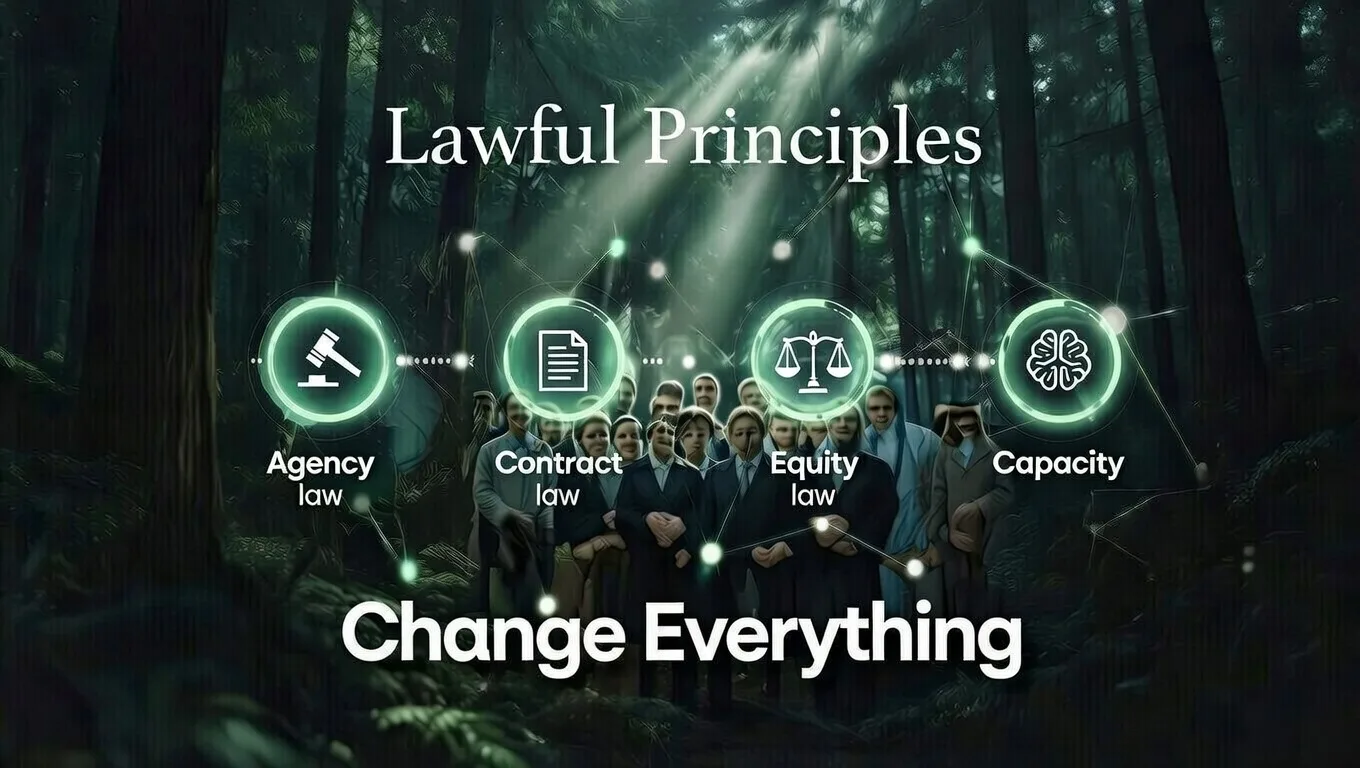
FIVE THINGS THAT CHANGE EVERYTHING
The legal system separates the living individual ("natural person") from the statutory entity ("legal person") created at birth registration, and this distinction changes everything. Legal persons have rights granted by law but no capacity to act—they require a contracted agent, which the system wrongly presumes you to be without proof.
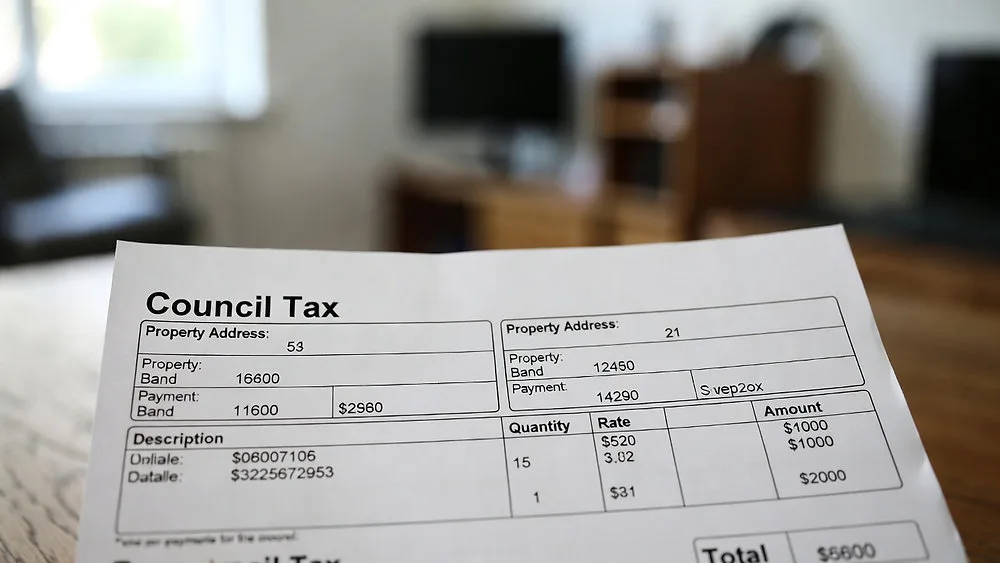
COUNCIL TAX AND THE PERSON
Council tax is not a direct charge for local services but a statutory tax imposed on legal entities called "persons" defined by law. It attaches to a legal person linked to a property, not directly to the living individual, based on roles like owner or tenant.

Societal Split Incoming: Have YOU Made Your Choice? We Are A Civilization at the Fork in the Road
We are facing a pivotal moment where hidden systems of control—like Digital IDs and Central Bank Digital Currencies—are converging rapidly, forcing a choice about our future. Society is splitting into those who accept the system, those who see through it, and those caught in between feeling its pressure.
Reclaim your freedom
Everything — the 5 Step Path, the AI Expert grounded in your own jurisdiction's law, the community and the full narrated library — for £15 a month, cancel anytime.