 Not a Person
Private Trusts
The oldest door out of the system
A private trust is one of the most powerful tools for separating yourself from the person. It rests on equity — a body of law older than the statutes used against you — and it has protected the assets of the wealthy and powerful for hundreds of years. It is, in effect, the back door to the whole system.

In plain terms
What a private trust is
A trust is a private arrangement, created by your own declaration rather than public registration, in which one person holds property for the benefit of another. It needs no filing and no permission — only three roles and a clear intention.
The Settlor
Creates the trust and places assets into it.
The Trustee
Holds the legal title — and manages it under duty.
The Beneficiary
Holds the beneficial interest — the real benefit.
The key move: ownership is split in two. Legal title — what the system sees and can act against — is separated from the beneficial interest — what is actually protected. They no longer sit in the same hand, or the same name.
The law beneath the law
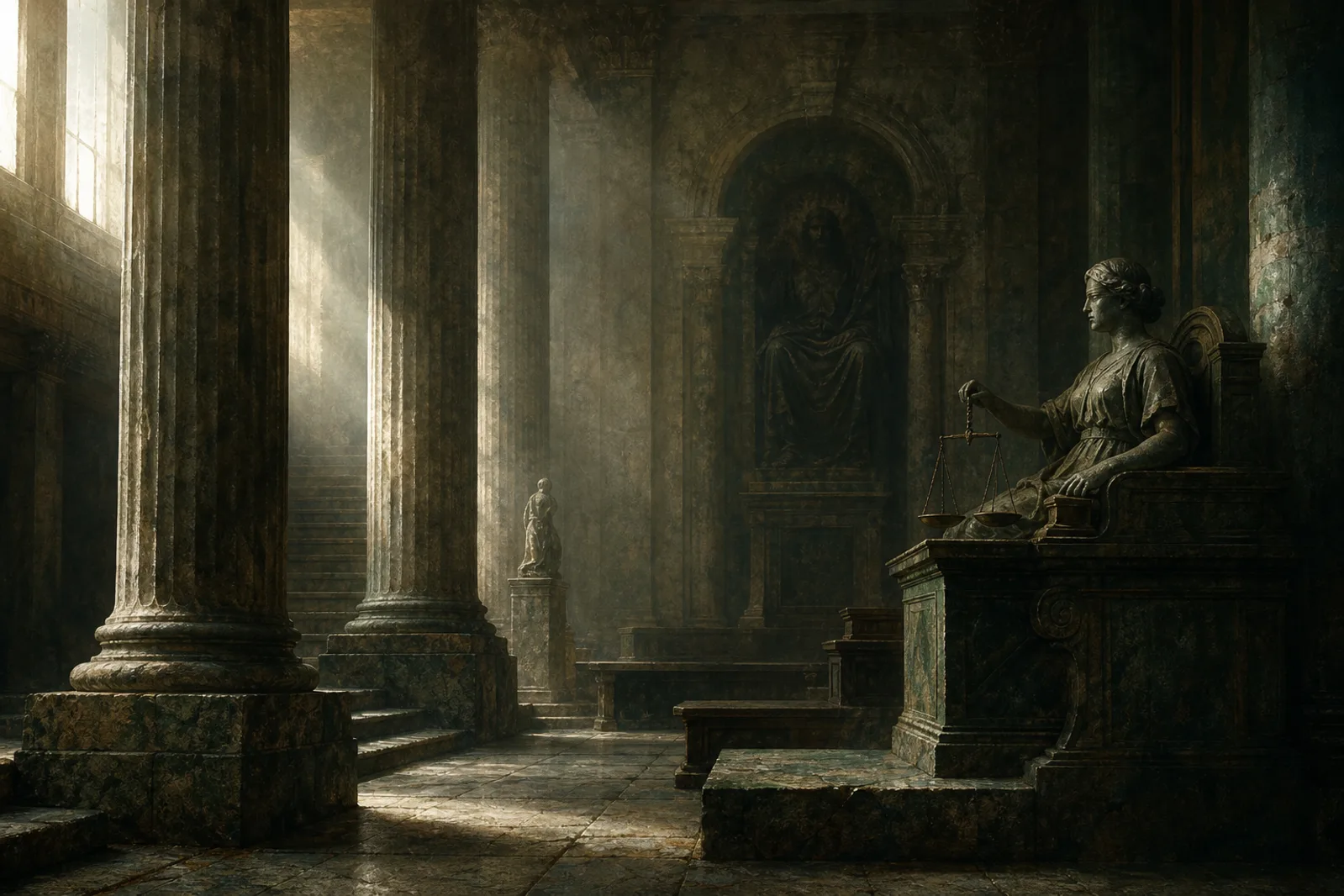
Equity is older than statute
Trusts live in equity — a parallel body of law that grew up to do what rigid statute could not: deliver fairness. It long predates the modern statutory system, and it recognises two kinds of ownership — legal title, who holds the paperwork, and equitable title, who truly benefits.
Equity has its own maxims, and they cut in your favour: it will not compel acceptance of a trust, and a statutory claimant with no contract is a mere volunteer — and equity gives volunteers no assistance.
Where the power is
Protection, and a position to stand on
Separating title from interest does two things at once: it shields what you hold, and it gives you a recognised place from which to deal with the system.
Title split from interest
Legal title and beneficial interest are formally separated — held by different hands, on the record.
Attachment stops at the person
Statutory claims reach the legal person and what it holds — not assets held in trust for another.
Standing the system must recognise
A trust is a position the statutory system is bound to engage with — not a presumption it can ignore.
A recognised place to speak from
From inside the trust you can interact with the system as trustee, on equal and lawful footing.
Taxation & inheritance
Assets registered in your legal name sit within the state's jurisdiction — and within reach of its taxation. Assets held in trust need not. Because they don't pass through your estate, they can bypass probate and the inheritance tax — often 40% of an estate — that a will quietly invites.
A last will and testament is, in effect, a handover form: it routes what you own through the state's process on your death. A trust offers a different path entirely — no probate, no valuation delay, and continuity across generations. And it is not a will: the trust operates now, in life, which is exactly why it isn't caught by the machinery a will invites. Death is not its mechanism.

Hidden in plain sight
The tool the wealthy never gave up
None of this is new or fringe. The great estates, dynasties and fortunes have been held in trust for centuries — precisely because trusts protect assets, sidestep probate, and keep wealth out of reach across generations. The same door has always been open. Most people were simply never shown it.
Inside Step 2 of the Path
Build yours, guided
You don't have to work it out alone. The Trust Builder walks you from what you want the trust to achieve — and why it isn't a will — through who administers and who benefits, to what it holds: land, companies, accounts, and, if you choose, the legal person itself. An AI drafts the bespoke provisions with you, then reviews the wholeassembled deed before you finalise; every draft is saved to your account with version history, and all of the builder's AI is free — it never uses your credits.
Two documents, one position
The deed creates the vehicle. The transfer instrument fills it.
A declaration of trust, on its own, is the position stated. What completes it is a formally executed deed of transfer of beneficial interest — one for each party — carrying the beneficial interest in the legal person and its property, present and future, into the trust, with your rights reserved and no agency created. The resulting trust you already hold is the floor; the express trust, completed by its instrument, is the ceiling. A challenge must displace both.
The builder generates both, and the pack tells you exactly how to execute them: who witnesses, who signs in which capacity, and how to store and cross-reference the set.
Your document pack
- The trust deed — your private express trust, hand-dated, with a proper execution page
- A deed of transfer of beneficial interest for each party
- The executing checklist — witnesses, signatures in both capacities, land and company follow-ups
- A Guide to Your Trust — a plain-English companion written for everyone named in it, including the trustee who comes after you
- A disclaimer of agency per party, and a bare-trustee declaration for each company held
Download it as a print-ready PDF, an editable Word document, or Markdown. An English-law (England & Wales) deed pack — outside the UK, your own jurisdiction's Level 2 Expert works through how it maps to your law before you execute.
How you get it: complete Step 2 of the Path in full, then a one-time £49 unlocks the Trust Builder Toolkit — the builder, the trespass notice generator and the accompanying guides. No subscription is needed to keep what you've built.
And where trusts don't exist
The principle travels further than the trust
The trust is the common-law route. In civil-law jurisdictions there is no native trust, so the instrument differs — the position is taken through your law's own machinery, the code position and the sworn declaration — but the underlying principle, separating the living being from the person and standing on a recognised position, still holds. Belgium, Germany, Netherlands and Spain are live now as civil-law Experts, grounded in exactly those instruments. The route adapts; the destination does not.
Live now — eleven jurisdictions
All at full depth: education, establish and respond.
United Kingdom
Common law & equity

Australia
Common law & equity
Canada
Common law & equity

Ireland
Common law & equity

New Zealand
Common law & equity
Scotland
Common law & equity

United States
Common law & equity

Belgium
Civil law

Germany
Civil law

Netherlands
Civil law
Spain
Civil law
The mechanism applies here too — tell us, and we build next












If yours isn't listed yet, say so when you start the Path — you lose nothing now, and it tells us where to build next.
Common-law & equity jurisdictions
United Kingdom, Australia, Canada (outside Quebec), Ireland, New Zealand, Scotland and United States, live now. The position is taken through the law of trusts and equity — a private express trust separating legal title from beneficial interest, completed by a transfer instrument. The Trust Builder produces an English-law (England & Wales) deed pack; outside the UK, your own jurisdiction's Expert works through how that position maps to your law before you execute anything.
Civil-law jurisdictions
Belgium, Germany, Netherlands and Spain, live now; more to follow. There is no native trust, so the position is taken through your law's own machinery — the code position and the sworn or notarial declaration. Your jurisdiction's Expert is grounded in those instruments, their formalities and their penalty provisions — not in a translation of the English trust.
Expert levels — Education, Establish, Respond — are earned through the Path and never purchased, the same in every jurisdiction.
This is educational material on the framework, not legal or financial advice.